The night before a physical exam, you might realize you’re missing something. You can’t remember the name of a medication, you’re not sure whether you should fast, and you suddenly wonder if that old vaccination record matters. That stress is avoidable.
How to prepare for a physical exam comes down to a few practical moves: bring the right documents, make a clear medication list, know why you’re being seen, follow any fasting or lab instructions, and show up rested and hydrated unless you were told otherwise. If your visit is for something specialized, such as a USCIS immigration exam, pre-employment physical, or travel clearance, the paperwork matters just as much as the exam itself.
Table of Contents
- Your Guide to a Stress-Free Physical Exam
- Universal Preparation for Any Physical Exam
- Tailoring Your Preparation for Specific Exams
- Managing Medications and Fasting Before Your Visit
- What to Expect During and After Your Exam
- Your Patient Checklist for Maryland Primary and Urgent Care
- Frequently Asked Questions
Your Guide to a Stress-Free Physical Exam
A physical exam goes more smoothly when you treat it like preparation for a meeting that matters. Bring your ID, insurance card, referral or employer paperwork if required, and any forms you were asked to complete. Write down your medications, allergies, past surgeries, and the symptoms or concerns you want addressed.
That last part matters more than people think. If you walk in saying only “I’m here for a checkup,” the visit can stay broad and superficial. If you walk in saying “I’ve had headaches for two weeks, my home blood pressure has been running higher than usual, and I need clearance for work,” the conversation becomes more useful right away.
A strong visit usually includes these basics:
- Bring documents you can’t replace from memory. Insurance details, work forms, immunization records, and photo ID save time at check-in.
- List medications exactly. Include prescription drugs, over-the-counter products, vitamins, supplements, and the dose if you know it.
- Know your recent health changes. Weight change, sleep problems, pain, blood pressure readings, or new specialist visits all help frame the exam.
- Follow instructions before you arrive. If fasting, labs, or specific paperwork are required, skipping them can delay results or paperwork completion.
Practical rule: Don’t rely on memory for anything that affects diagnosis, testing, or forms.
Patients often assume the exam starts when the clinician enters the room. In reality, it starts earlier. The quality of your preparation affects how accurate the vital signs are, how quickly forms get completed, and how much useful decision-making can happen during the appointment.
Universal Preparation for Any Physical Exam
The basics apply whether you’re coming in for an annual visit, a pre-employment clearance, or a more specialized physical. Good preparation reduces delays, avoids repeated questions, and gives your clinician a cleaner picture of your health.
Start with documents and a usable health summary
Bring the items that affect registration, billing, and clinical decision-making. That usually includes a government-issued ID, insurance card, specialist referral if one was requested, and any forms from an employer, school, surgeon, or agency.
Then make a one-page health summary. It should include:
- Current medications. Include the name, dose if known, and how often you take it.
- Allergies and reactions. “Penicillin” is less helpful than “penicillin caused a rash.”
- Past surgeries and major diagnoses. Keep it simple and dated if you know the year.
- Symptoms or goals for the visit. List the top few in order of importance.
If your records are scattered across patient portals, old discharge paperwork, and phone photos, it helps to organize your medical records before the visit so you can hand over useful information quickly.
For routine preventive care, it also helps to review recommended preventive health screenings for adults before the appointment. That gives you a better sense of which labs, imaging studies, or follow-up tests might come up in the discussion.
Sleep and hydration affect the accuracy of your exam
Preparation isn’t just paperwork. Your body affects the exam too.
Sleep quality directly affects vital sign reliability. Clinical research shows that one night of poor sleep can raise blood pressure by 10 to 20 mmHg and heart rate by 5 to 10 beats per minute according to guidance on preparing for a physical exam. If you’re being evaluated for blood pressure, heart symptoms, surgery clearance, or a job-related exam, that can change how the visit is interpreted.
Hydration also matters. Drinking at least 8 ounces of water one hour before a blood draw can improve phlebotomy success and help prevent falsely high markers such as hematocrit and hemoglobin, based on clinical guidance about what not to do before a physical exam. If you were told to fast, ask whether water is still allowed. In many cases, it is.
If you slept badly, say so before your blood pressure is interpreted. If you’re dehydrated, say so before the blood draw starts.
What works better than trying to remember everything
Patients often try to “just tell the doctor” what’s been happening. That sounds efficient, but it usually leads to missing details. A short log works better.
Use your phone notes app or a piece of paper and track:
| What to track | Helpful details |
|---|---|
| Blood pressure | Date, time, reading, and whether it was at home or elsewhere |
| Symptoms | When they started, how often they happen, what makes them better or worse |
| Sleep | Bedtime, awakenings, snoring, fatigue, or poor sleep before the visit |
| Food or triggers | Meals, caffeine, alcohol, or anything linked to symptoms |
This is especially useful at annual visits. Many patients arrive without finishing earlier recommended screenings, but completing tests such as CMP and CBC ahead of the appointment gives the clinician better information about liver and kidney health, metabolism, infection, anemia, and related concerns during the visit itself, as noted in this preventive exam checklist.
Tailoring Your Preparation for Specific Exams
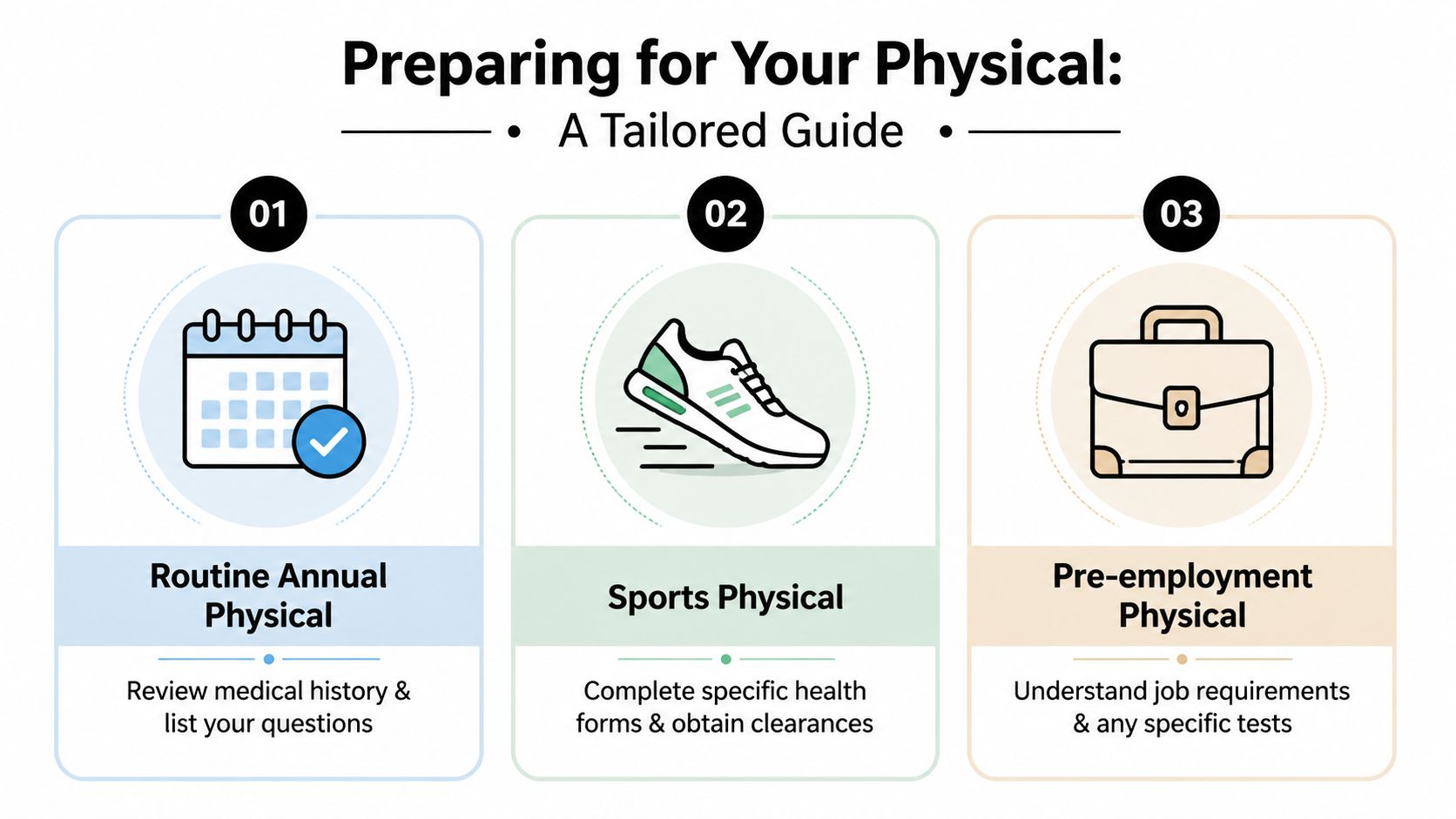
Not every physical has the same purpose. Some are broad and preventive. Others are paperwork-driven. Some require very specific records before the visit can be completed.
Routine annual physicals
An annual physical works best when it’s treated as preventive care, not just a formality. Bring updates on new diagnoses, specialist visits, medications, and family history changes. If you’ve been asked in the past to complete bloodwork, cancer screening, or follow-up testing, do that before the appointment when possible so the visit can focus on decisions instead of pending tasks.
What helps most:
- Bring trend data. Home blood pressure logs, sleep patterns, and diet notes make the conversation more specific.
- Know your priorities. If you want to discuss weight change, fatigue, sexual health, or a recurring symptom, write it down first.
- Bring prior test results if they weren’t done in the same system. Outside labs and imaging often change the direction of the visit.
Pre-employment and pre-op visits
These visits are less flexible than routine checkups. The key question isn’t only “How are you feeling?” It’s also “What exactly does the employer or surgeon require?”
For a pre-employment visit, bring every form you received and read the instructions before arrival. Some employers want a general medical clearance. Others also require urine testing, immunization records, respirator clearance, or additional paperwork. If you’re scheduling this type of appointment, it helps to review what’s commonly included in a pre-employment drug test and physical so you don’t arrive expecting a basic exam when the employer needs more documentation.
For pre-op clearance, bring the surgery date, surgeon’s name, and any request sheet from the surgical office. If the surgeon requested specific testing, missing that paperwork can slow everything down.
The most common problem with paperwork-based exams isn’t the exam. It’s arriving without the exact form that has to be signed.
USCIS immigration medical exams
Generic advice often fails patients. A USCIS immigration medical exam is not just a routine physical with an extra signature. It has its own documents, required testing, and vaccine review process.
USCIS medical exam denials can occur in 5 to 10 percent of cases due to incomplete preparation, including missing Form I-693, vaccination proof such as MMR or Tdap, and required TB and gonorrhea testing, according to this immigration physical preparation guide.
Bring these items if they apply to you:
- Government-issued photo ID. Passport is often the easiest choice.
- Vaccination records. Bring originals or reliable documentation, not guesses.
- Previous TB records or chest imaging reports. Especially if you’ve had prior testing, treatment, or a known history.
- Medication list and chronic condition records. These help document existing conditions accurately.
- Form I-693 materials if the clinic asked you to bring them. Don’t fill in sections you weren’t instructed to complete.
Common mistakes include assuming childhood vaccines will be “on file somewhere,” not bringing prior records, and showing up without understanding which documents must stay sealed after completion.
Quick comparison table
| Exam type | Main purpose | What to bring | Most common avoidable problem |
|---|---|---|---|
| Annual physical | Preventive review and health planning | Medication list, symptom notes, outside results, screening updates | Arriving without completing prior recommended tests |
| Pre-employment | Work clearance and required forms | Employer packet, ID, immunization records if requested | Wrong or incomplete paperwork |
| Pre-op | Surgical clearance | Surgeon request sheet, medication list, procedure details | Missing surgeon-specific instructions |
| USCIS immigration | Civil surgeon exam and immigration documentation | Photo ID, vaccine records, required forms, prior TB records if relevant | Missing I-693 materials or vaccine proof |
Managing Medications and Fasting Before Your Visit
Medication and fasting instructions cause more confusion than almost anything else before a physical. Patients either skip medicines they should have taken or eat and drink normally before a test that required fasting. Both create problems.
Know whether your test requires fasting
Don’t assume every physical requires fasting. Some don’t. Some do only if bloodwork is being done, and even then it depends on the lab order.
If you were told to fast, confirm what that means for your specific appointment. In many settings, plain water is allowed and helpful. Coffee, sweet drinks, energy drinks, and breakfast are different. They can interfere with certain tests and can also confuse the interpretation of results.
A practical approach is simple:
- If the clinic said fast, follow that instruction exactly.
- If you’re unsure, call before the morning of the visit.
- Don’t make up your own version of fasting. “Just a little coffee” still counts.
Don’t guess about daily medications
Most patients should not stop prescription medication on their own before an exam. That includes blood pressure medicine, heart medicine, seizure medicine, and other maintenance drugs. Stopping them without instruction can create more risk than taking them.
The exception is when the clinic specifically tells you to hold a medication for a lab or procedure. That decision should come from the ordering clinician, not from online advice or a friend’s experience.
Patients with diabetes need to be especially careful. If you’re fasting and use insulin or diabetes pills, ask for exact instructions ahead of time. The goal is to avoid both inaccurate testing and unsafe low blood sugar.
What not to do: Don’t skip a medication just because you want your exam to look “better.” A physical is most useful when it reflects real life.
This short video gives a helpful general overview before a routine visit:
What to do the morning of the visit
Keep the morning simple. Bring your medication list even if you know the names. If fasting, don’t test the rules. If you’re getting blood drawn, water helps. As noted earlier in clinical guidance, at least 8 ounces of water one hour before a blood draw improves the process and helps avoid falsely high lab values when fasting rules allow water.
Wear clothing that makes the exam easier, not harder. A tight sleeve slows blood pressure checks. Complex layers make exams and blood draws less efficient. If a urine sample may be needed, don’t arrive extremely dehydrated.
What to Expect During and After Your Exam
Many people are calmer once they know the sequence. Most physical exams follow a predictable pattern. The details vary by reason for visit, but the flow is familiar.
Check-in and vital signs
At check-in, staff usually confirm your identity, insurance, forms, and reason for the visit. If your paperwork is incomplete, delays often start.
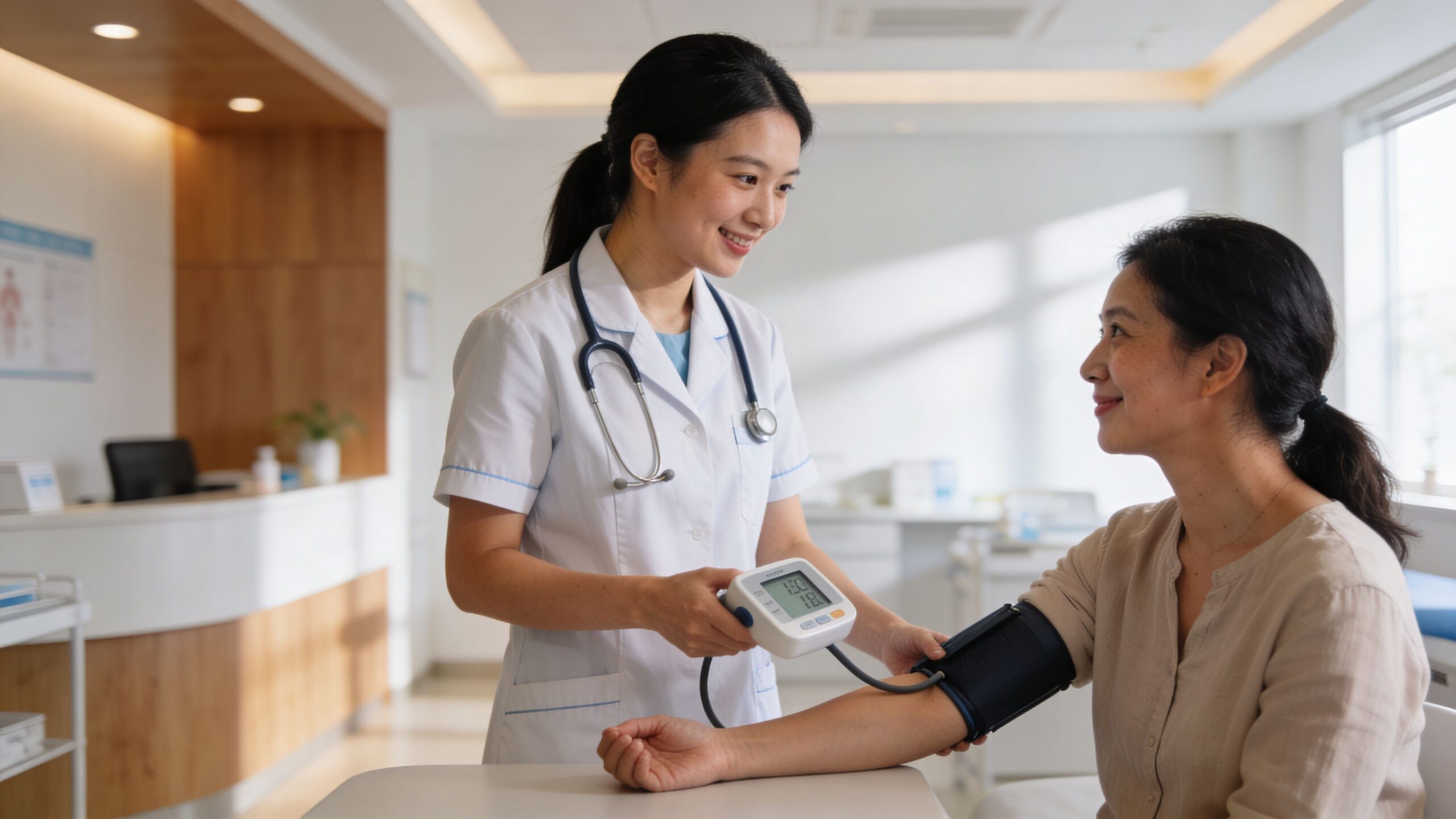
Then come the basics: blood pressure, pulse, temperature, weight, and sometimes oxygen level. For some visits, a urine sample, blood draw, EKG, or other test may be ordered as part of the same appointment.
The exam itself
The clinician will usually review your medications, history, symptoms, and the purpose of the visit first. That conversation shapes the rest of the exam. A routine annual visit often focuses on preventive care, chronic disease review, and recommended screening. A work or immigration exam may focus more tightly on form requirements and required testing.
A standard physical may include evaluation of:
- Heart and lungs. Listening for rhythm, rate, and breathing findings.
- Head, neck, and throat. Depending on symptoms and the purpose of the visit.
- Abdomen and circulation. Especially if symptoms or medical history suggest follow-up is needed.
- Musculoskeletal or neurologic basics. If mobility, pain, injury, or work clearance is relevant.
Some visits also involve sex-specific preventive discussions or exam components. Those decisions depend on age, symptoms, history, and why you came in.
After the visit
The appointment isn’t finished when the exam ends. The next step may be lab work, forms, referrals, medication renewal, or follow-up scheduling.
When preventive testing is involved, prior preparation makes the conversation much better. Many patients arrive at annual physicals without completing previously recommended screenings. When tests such as CMP and CBC are completed in advance, the clinician has more useful information during the visit to assess liver and kidney function, metabolism, hydration, anemia, infection, and related concerns. That leads to a more informed plan instead of a delayed one.
Before you leave, make sure you know:
| Before leaving the clinic | Why it matters |
|---|---|
| Whether more tests were ordered | You need to know what still needs to be completed |
| When forms will be ready | Important for jobs, school, surgery, or immigration deadlines |
| How results will be shared | Portal, phone call, follow-up visit, or printed summary |
| Whether a follow-up is needed | Some findings need another visit after labs or screening |
Ask one final question before leaving: “What happens next, and what do you need from me?”
That single question prevents a lot of confusion.
Your Patient Checklist for Maryland Primary and Urgent Care
Use this as your final check before you leave home.
- Confirm the appointment type. Routine physical, pre-employment, pre-op, travel, or USCIS exams each require different preparation.
- Bring identification and insurance. Add any employer, surgeon, or immigration paperwork.
- Pack vaccine and prior testing records. This matters most for USCIS and travel visits.
- Write down medications and allergies. Include supplements and over-the-counter products.
- Follow fasting instructions exactly. If you weren’t told to fast, don’t assume.
- Sleep well the night before when possible. Poor sleep can distort cardiovascular baseline measurements.
- Bring symptom notes or home readings. Blood pressure logs and sleep notes are especially useful.
- Wear simple, comfortable clothing. It makes exams, blood pressure checks, and labs easier.
- Call ahead if anything is unclear. That’s faster than rescheduling after arrival.
If you want a broader sense of how an urgent care center typically handles scheduling, patient flow, and same-day needs, that overview can help you know what to expect from a busy clinic environment.
If you still need to book, check current options for a same-day doctor appointment near me before the day fills up.
Frequently Asked Questions
Can a telemedicine visit replace a physical exam?
Not fully. Telemedicine is useful for reviewing symptoms, medications, records, and next steps. But a true physical exam usually still requires in-person vital signs, hands-on evaluation, forms, vaccinations, or lab testing.
What if I forgot my records?
Come anyway if the visit is important, but expect limits. A routine visit can often still move forward with your history and medication list. Paperwork-heavy visits, especially USCIS, pre-op, or employer exams, may need official records before they can be completed.
Should I reschedule if I didn’t sleep well or forgot to fast?
It depends on why you’re being seen. If the main goal is blood pressure accuracy, cardiovascular screening, or fasting lab work, poor preparation can reduce the value of the results. If the visit is urgent or paperwork-related, it may still make sense to come and tell the staff exactly what happened.
I have diabetes or high blood pressure. Is there anything extra I should do?
Yes. Bring your medication list, recent home readings if you have them, and ask for exact instructions if fasting is involved. Don’t skip chronic medications unless the clinic specifically told you to do that.
How should I schedule a USCIS immigration medical exam?
Call specifically for that exam type rather than booking it as a routine physical. USCIS visits often require different timing, records, and follow-up steps. Say upfront that you need an immigration medical exam so the staff can tell you what to bring.
If you need a routine physical, a pre-employment exam, or a USCIS immigration medical exam, Maryland Primary and Urgent Care offers same-day access, on-site testing, and coordinated follow-up to help you complete the visit efficiently.