
You wake up sick, your schedule is packed, and the first search you type is same day doctor appointment near me. The good news is that getting seen today is often realistic if you choose the right care setting and do a few things before you leave home.
Patients often encounter one of two common issues. They either pick the wrong type of visit, or they show up unprepared and lose time at check-in. The fastest path is usually simple: match your symptoms to the right care option, book smart when possible, and verify your insurance before you arrive.
Table of Contents
- Why You Can Get a Doctor's Appointment Today
- Walk-In vs Same-Day Scheduling vs Telemedicine
- How to Find and Book Your Appointment Now
- Preparing for Your Same-Day Visit to Avoid Delays
- What to Expect at the Clinic Arrival and Triage
- Frequently Asked Questions About Same-Day Care
Why You Can Get a Doctor's Appointment Today
Same-day care isn't unusual anymore. It's now built into how many clinics, urgent care centers, and virtual care teams operate.
Three common ways people get seen
You usually have three practical routes:
- Walk-in urgent care: Best when you need an exam today and don't want to wait for a callback.
- Scheduled same-day appointment: Best when you want a reserved slot and a more predictable arrival time.
- Telemedicine: Best when your issue can be assessed safely by phone or video.
That shift toward immediate access is backed by strong patient response. Solv-rated clinics like AFC Urgent Care report 95-99% recommendation rates, with short wait times and extended hours driving that demand, as noted by DispatchHealth's overview of same-day care access.
Why access is easier than it used to be
Clinics have changed their scheduling models because patients don't want to wait days for coughs, infections, medication questions, or minor injuries. They also know that if care isn't available quickly, people often end up in a more expensive and less convenient setting.
Practical rule: If your problem feels urgent to you but not life-threatening, there's a good chance same-day care is the right first step.
Communication tools matter too. Appointment reminders, intake links, and real-time updates help people get through the process faster. If you're curious how clinics use messaging to reduce missed connections and keep patients informed, this overview of Health Care SMS is a useful example of the systems behind smoother same-day access.
When same-day care makes sense
Look for a same day doctor appointment near me when you need prompt treatment for a problem that shouldn't wait, but doesn't sound like an emergency. Examples include worsening cold symptoms, a sore throat, mild asthma concerns, painful urination, a minor sprain, a rash, or a medication issue.
If you have severe chest pain, major breathing trouble, uncontrolled bleeding, or sudden neurologic symptoms, skip same-day clinic searches and seek emergency care immediately.
Walk-In vs Same-Day Scheduling vs Telemedicine
The right option depends on two things. First, whether you need hands-on care. Second, how much time and uncertainty you're willing to tolerate.
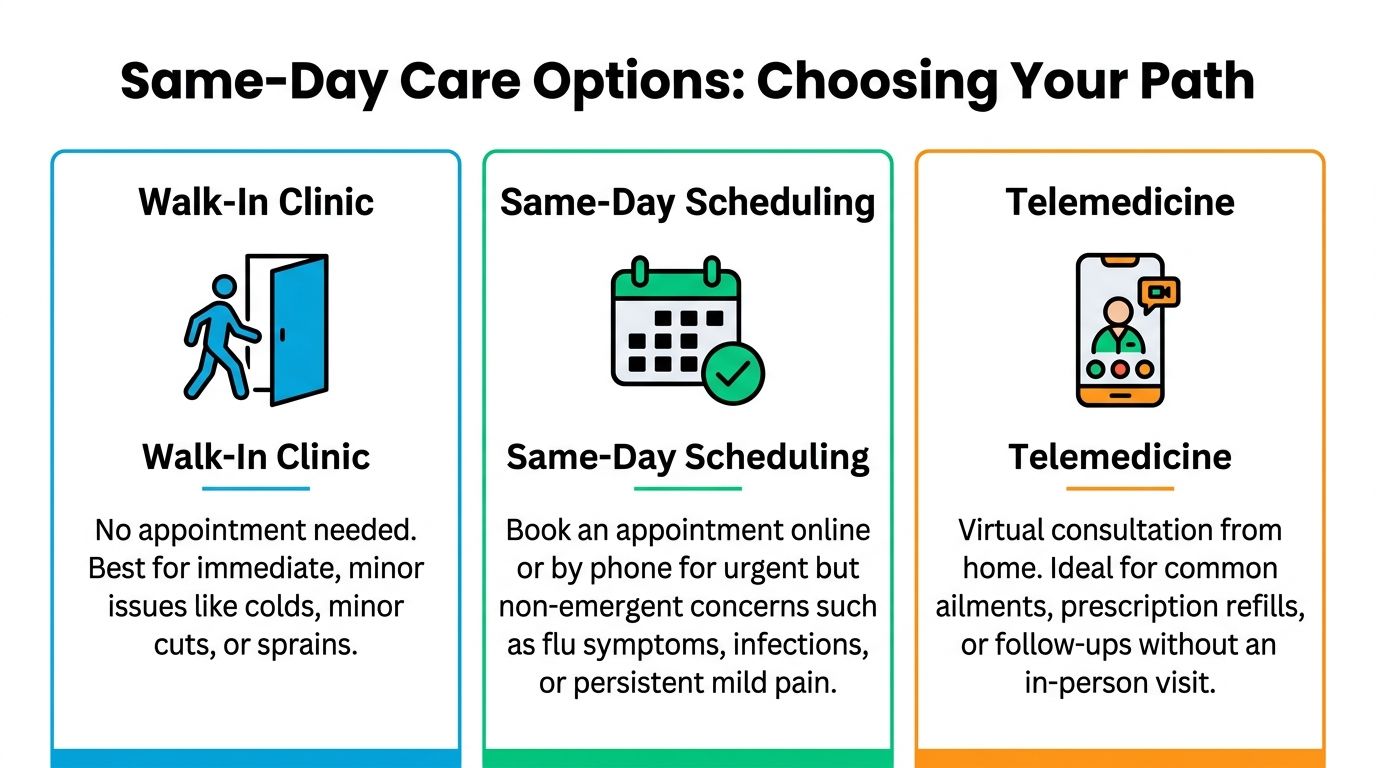
Choosing based on what needs to happen
A walk-in clinic works well when the problem is straightforward but still needs an in-person look. That includes minor injuries, ear pain, sore throat, fever, or symptoms that may need testing.
A scheduled same-day appointment is usually the smoothest option if you can book online or by phone before leaving home. You still get prompt care, but you avoid some of the unpredictability of a walk-in queue.
Telemedicine is a strong choice when the main value is medical guidance, follow-up, medication review, or evaluation of symptoms that don't require touching the affected area, listening to your lungs in person, or doing on-site testing.
Urgent care now handles nearly 30% of visits that could otherwise end up in the emergency room and saves an estimated $4.5 billion in healthcare costs annually, according to Atlantic Health's urgent care overview.
Choosing Your Same-Day Care Option
| Care Option | Best For | Average Wait Time | Typical Cost |
|---|---|---|---|
| Walk-in clinic | Minor illness or injury that needs an exam, testing, or imaging | Varies by arrival volume and triage priority | Varies by insurance and clinic billing |
| Same-day scheduling | Urgent but non-emergency problems when you want a reserved time | Usually more predictable than walk-in | Varies by insurance and visit type |
| Telemedicine | Common symptoms, medication questions, follow-ups, and issues suitable for virtual assessment | Often the fastest to start | Varies by insurance and platform |
What works better in real life
If your concern might need an X-ray, lab test, swab, urine test, or hands-on exam, don't start with video unless the clinic can facilitate a smooth conversion to in-person care.
If your schedule is tight, same-day booking beats walking in blind. A reserved slot usually means less guesswork. Many patients who search for fast in-person care also consider walk-in visits when they can't pin down an exact time.
The trade-off most patients miss
Walk-ins give flexibility. Scheduled visits give control. Telemedicine gives convenience.
What doesn't work is forcing the wrong format. A swollen ankle on a video call may still end in an in-person trip. A simple medication refill doesn't need a crowded waiting room. Match the format to the clinical task.
How to Find and Book Your Appointment Now
If you're trying to be seen today, speed matters, but sequence matters more. Search first, confirm second, book third.
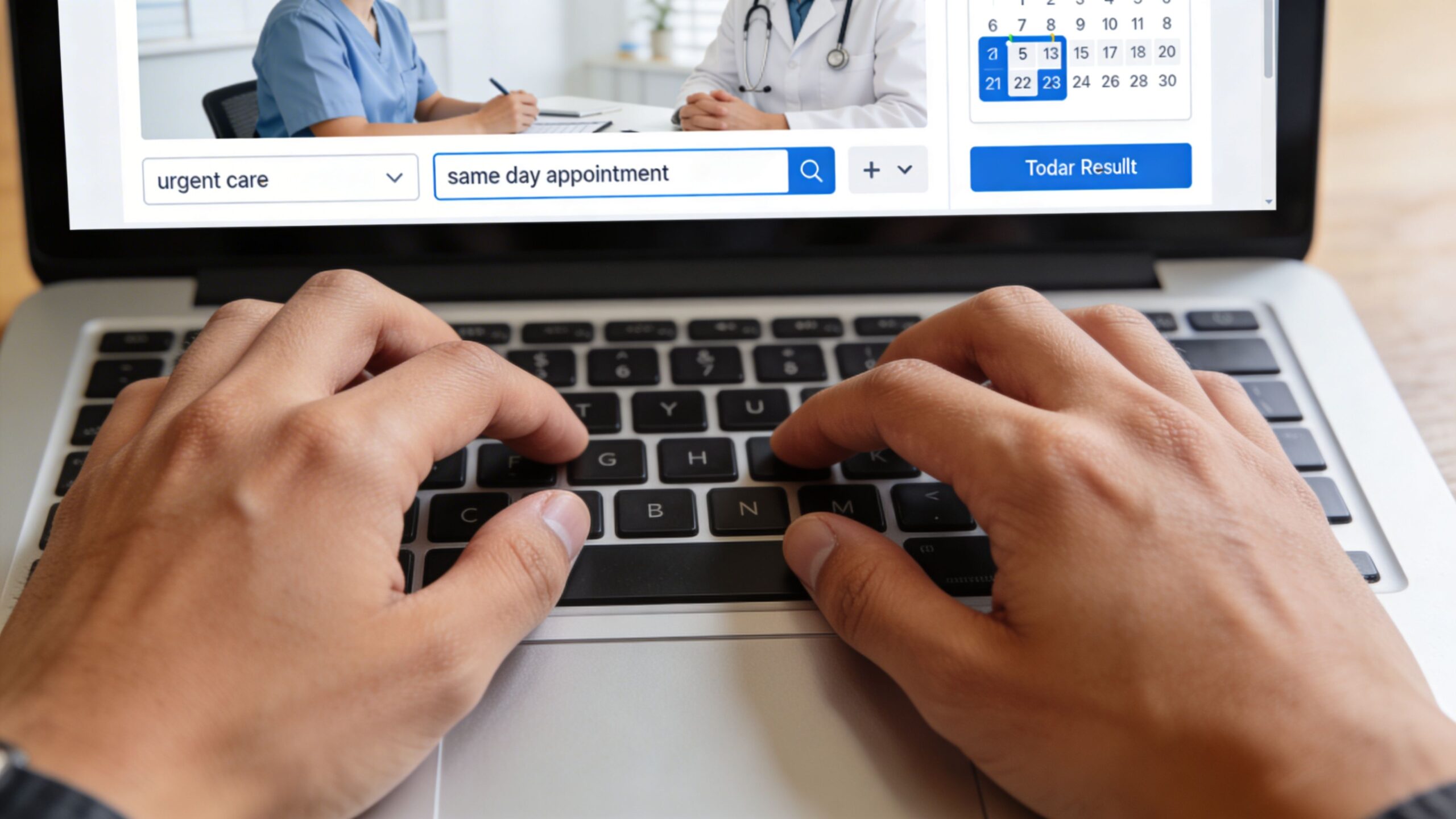
Start with the right search terms
Use search phrases that reflect what you need:
- Same day doctor appointment near me if you want a reserved time
- Urgent care open now if you need immediate in-person access
- Telemedicine same day appointment if you want to stay home
- Primary care same day appointment if you'd prefer continuity rather than a one-off visit
Then check three things before you click book: today's hours, whether new patients are accepted, and whether the clinic treats your issue.
Why clinics can offer same-day slots
Many practices now use open access scheduling, meaning they reserve 30-50% of daily slots for same-day needs, a model described by the AAFP's guidance on open access scheduling. That system is why appointments may appear the morning you search, even if the calendar looked full earlier.
This is also why calling can still help. Schedules shift throughout the day because of cancellations, rescheduling, and clinical triage.
The fastest booking process
Use this order:
- Check the clinic website first. Online booking shows whether the practice has real same-day availability.
- Call if the schedule looks full. Front desk staff can sometimes place you into newly opened slots or direct you to the best visit type.
- Ask one clear question. “Do you have a same-day appointment for my issue, or should I walk in?”
- Book before driving over. This avoids arriving at the wrong time or wrong location.
If you want to understand the software side of how clinics manage those openings, this guide to medical appointment scheduling software gives a useful behind-the-scenes look.
For patients ready to reserve a visit instead of waiting in a queue, online appointments pages are often the quickest path.
A short explainer can also help if you're comparing booking workflows and clinic flow before choosing a location:
Call early in the day if you can. Same-day inventory is usually easiest to access before the afternoon rush.
Preparing for Your Same-Day Visit to Avoid Delays
A rushed visit usually goes better when you spend five minutes preparing before you leave. Most delays at same-day clinics happen at check-in, not in the exam room.
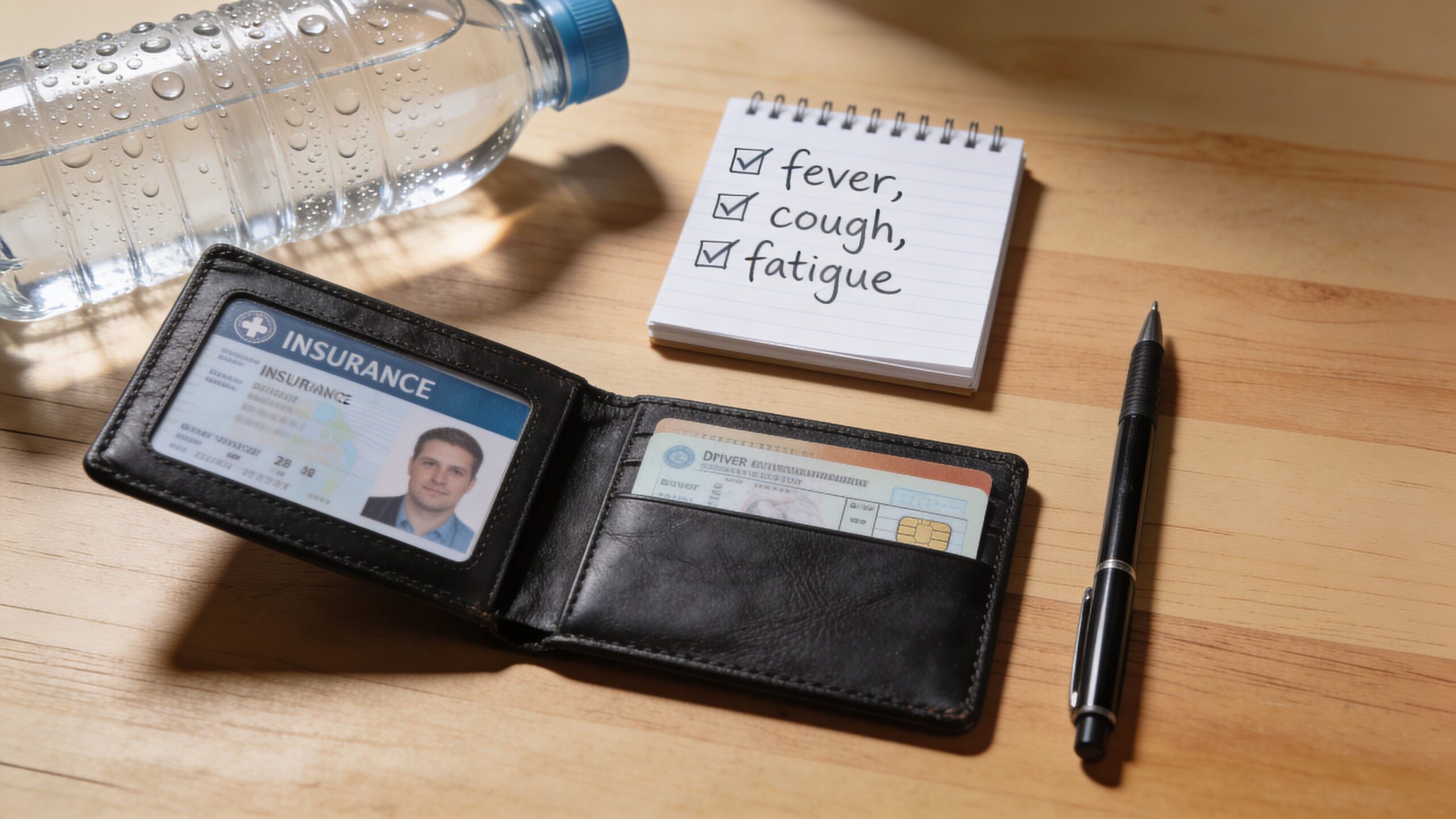
Bring the basics
Have these ready:
- Photo ID: Bring a valid ID that matches the patient registration.
- Insurance card: Physical or digital is fine if the clinic accepts it.
- Medication list: Include dosages if you know them.
- Allergy list: Especially medication allergies.
- Symptom summary: Write down when it started, what changed, and what you've already tried.
If you're bringing a child or another adult, also bring any documents needed to authorize care.
Verify insurance before you arrive
This is the step many patients skip, and it's the one that causes the most frustration later.
A 2025 analysis found that 15% of patients reported surprise bills from same-day urgent visits despite having insurance, which is why pre-visit verification matters, according to Ucare Clinics' discussion of insurance acceptance and same-day visits.
Call the number on the back of your insurance card or use your insurer's app. Ask:
- Is this clinic in network
- Is my visit billed as urgent care, primary care, or telehealth
- Do I need a referral or prior approval
- What is my copay or deductible responsibility
Don't rely on “most insurances accepted.” Confirm your exact plan.
Write down your main concern
When patients are worried, they often tell the story out of order. That makes triage slower.
Use a simple format:
| What to note | Example |
|---|---|
| Main problem | Sore throat and fever |
| Start time | Began yesterday morning |
| Severity change | Worse overnight |
| Self-treatment | Took acetaminophen |
| Red flags | Trouble swallowing, rash, shortness of breath |
A short note like that helps front desk staff, nurses, and clinicians move faster and ask better questions.
What to Expect at the Clinic Arrival and Triage
Arriving for same-day care feels more manageable when you know why the process works the way it does. The first minutes are usually about sorting urgency, confirming registration, and getting the right patient into the right room.
What happens first
You check in, provide ID and insurance, and answer basic questions about your symptoms. A staff member may also verify medications, allergies, and the reason for your visit.
Then triage starts. That means a nurse or trained staff member decides how quickly you need to be seen based on your symptoms, not just your arrival time.
Someone who came in after you may go first if their condition is more urgent.
Why wait times vary even with an appointment
High-performing primary care practices often reserve 25-40% of daily slots for same-day needs and use triage protocols plus EHR systems to manage patient flow, aiming for wait times under 20 minutes, as described by Healthcare Dive's reporting on same-day scheduling and clinic operations.
That doesn't mean every visit starts immediately. A patient with a potentially serious problem can change the queue fast. Labs, imaging, and procedure needs can also shift room use.
How to make arrival easier on yourself
A few habits help:
- Arrive a little early: Even a booked visit may require registration.
- Answer triage questions directly: Focus on your main symptom and what changed.
- Say if you're getting worse: That matters more than a long medical backstory at check-in.
If you're weighing the benefits of a clinic model that combines routine and immediate care, this overview of the advantages of Maryland primary care urgent care clinic shows why many patients prefer one setting that can handle both.
Frequently Asked Questions About Same-Day Care
Can I get a same-day appointment instead of going to the ER
Yes, if your condition is urgent but not life-threatening. Same-day care is appropriate for many illnesses and minor injuries. If you have severe chest pain, major shortness of breath, uncontrolled bleeding, sudden confusion, or stroke-like symptoms, go to the ER.
Is a scheduled same-day visit better than walking in
Usually, yes, if you can get a slot. It gives you a defined arrival window and often reduces uncertainty. Walk-in care still makes sense when you need help quickly and no bookable times are available.
What if English isn't my first language
Ask about interpretation when you book, not after you arrive. A 2025 WHO report found that 35% of adults with limited English proficiency in urban areas avoid same-day care because of communication fears, as cited in this discussion of walk-in appointment access and language barriers. If you need language support, say so clearly when scheduling.
Will I know the cost before the visit
Not always, but you can reduce surprises. Call your insurer, confirm network status, and ask the clinic how the visit is categorized for billing. That one step solves many of the problems patients discover too late.
Can same-day care handle ongoing health problems
Often, yes, especially when a chronic condition suddenly flares or needs prompt review. The key is follow-up. Immediate treatment is helpful, but continuity matters if the issue keeps returning or needs long-term management.
What should I do if no same-day appointments show online
Call the office. Online schedules don't always reflect cancellations, triage openings, or walk-in capacity. Ask whether there's a cancellation list, a telemedicine option, or a recommended arrival window for in-person care.
If you need prompt care in Lanham or Prince George’s County, Maryland Primary and Urgent Care offers walk-in urgent care, same-day appointments, and telemedicine with on-site services and coordinated follow-up. You can book online or call the clinic to find the fastest option for your situation.