
You wake up with a wet, heavy feeling in your chest. You cough, but nothing seems to move. By the time you try to talk, laugh, or climb stairs, it feels like mucus is sitting in your lungs and refusing to budge.
The best way to get rid of chest congestion is to start with measures that thin and mobilize mucus, then add the right over-the-counter medication if needed, and get evaluated if symptoms last too long or start pointing to something more serious. In practice, that means fluids, humidified air, better sleep positioning, productive coughing, and careful use of an expectorant rather than automatically reaching for a cough suppressant.
Table of Contents
- Understanding That Heavy Feeling in Your Chest
- Immediate Relief Strategies You Can Start Now
- Choosing the Right Over-the-Counter Medication
- Active Breathing Techniques to Clear Mucus
- When Home Remedies Are Not Enough
- Frequently Asked Questions About Chest Congestion
Understanding That Heavy Feeling in Your Chest
Chest congestion usually means excess mucus in the lower airways. It is often noticed as a rattling cough, tightness, noisy breathing, or the sense of needing to clear something from the chest but being unable to. Viral illnesses are a common trigger, especially colds, flu, and bronchitis. Allergies can also contribute in some people, especially when nasal drainage and airway irritation overlap.
That overlap matters. If you're dealing with seasonal symptoms, sinus pressure, or repeated flare-ups, these Salus Natural Medicine allergy insights can help you think through whether allergy-driven inflammation may be adding to the problem.
Another clue is timing. If your congestion started after a recent respiratory infection, lingering cough and mucus can stick around even after fever or sore throat improve. If that sounds familiar, this guide on why a cough can linger after the flu helps explain what often happens during recovery.
What chest congestion is and what it isn't
Chest congestion is not the same as a stuffy nose, and it isn't always a sign that you need antibiotics. In many adults, it's the body's response to irritation or infection. Mucus forms to trap particles and help clear the airway, but once it gets too thick, it becomes part of the problem.
Practical rule: The goal isn't to stop every cough. The goal is to make the cough useful enough to move mucus out.
A simple timeline that works
If you're trying to decide what to do today, use this timeline:
| Timeframe | Focus |
|---|---|
| First 48 hours | Thin mucus, loosen secretions, improve drainage |
| If symptoms persist | Add the right OTC option and use active clearance methods |
| If symptoms drag on or worsen | Get assessed for bronchitis, pneumonia, or another cause |
That sequence works better than jumping straight to random cold medicines. Chest congestion improves fastest when you match the treatment to what the mucus is doing.
Immediate Relief Strategies You Can Start Now
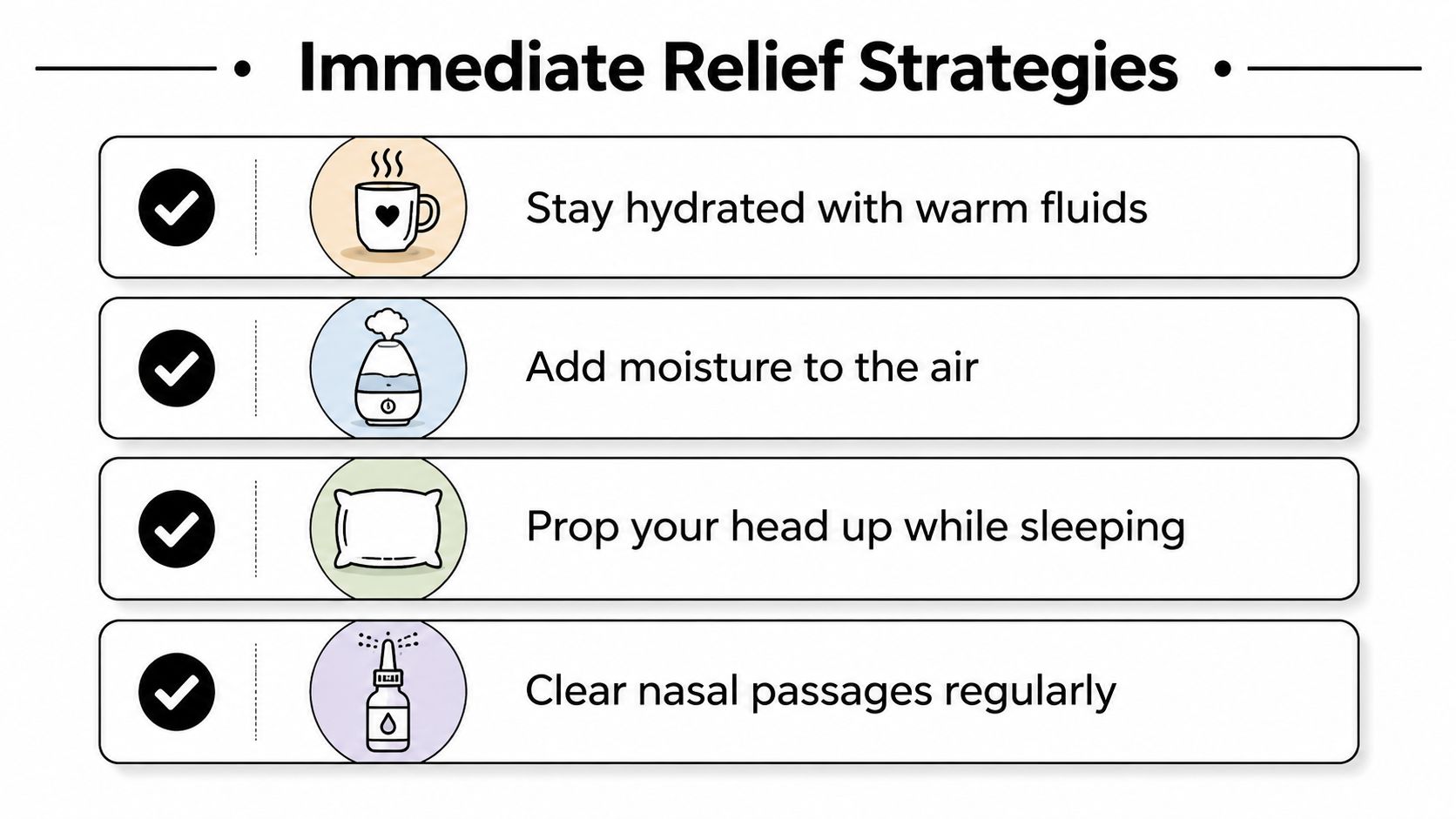
The first response should be simple and physical. Thick mucus clears better when you change its consistency, moisten the airways, and use gravity to your advantage.
Start with fluids
Clinical understanding shows that dehydration increases mucus viscosity by approximately 30 to 40%, which makes it harder for the respiratory system to clear the airways. Staying hydrated helps thin mucus so it drains more effectively from the lungs, as described in this chest congestion hydration guidance.
Warm fluids are often easier to tolerate when your throat is irritated. Water is still the main tool. Tea, broth, and other non-dehydrating drinks can also help. Alcohol and heavily caffeinated drinks can work against you if they leave you drier.
Change the air around you
Dry air makes mucus feel sticky and stubborn. A humidifier can help keep the airway environment from drying out further. If you don't have one, a steamy shower is a practical substitute. Some people also get relief from inhaling steam carefully from a bowl of hot water, but keep it warm rather than scalding.
When nasal blockage is part of the picture, mucus often seems worse because you're breathing through your mouth and drying everything out. If that applies to you, this guide on how to get rid of a stuffy nose is worth reviewing alongside chest-focused care.
Use position to help drainage
Lying flat often makes nighttime coughing worse. Raise your head and shoulders so mucus doesn't pool as easily. Even a modest incline can make sleep more tolerable and reduce that heavy morning cough.
A few practical moves work well:
- Use extra pillows: Support the upper back and shoulders, not just the neck.
- Rest on your side if needed: Some people cough less this way than flat on the back.
- Take short movement breaks: Gentle walking can help loosen secretions more than staying still all day.
If you're coughing more at night than during the day, sleep position is often part of the reason.
What to do during the first 48 hours
If symptoms are new, keep the plan basic and consistent:
- Drink fluids regularly: Small, frequent intake works better than waiting until you're thirsty.
- Run a humidifier or take a steamy shower: The point is to keep the airway moist.
- Sleep with your upper body propped up: Aim for head and chest support, not just one pillow under the head.
- Clear your nose if it's blocked: Chest and nasal congestion often worsen each other.
- Seek prompt evaluation if breathing feels difficult: If symptoms are escalating, it's reasonable to look for a same-day doctor appointment rather than trying to push through it.
These measures aren't dramatic, but they're often the difference between mucus that sits there and mucus that finally starts moving.
Choosing the Right Over-the-Counter Medication
A lot of people buy the wrong cough medicine for chest congestion. The biggest mistake is suppressing a cough that should be helping clear mucus.

Expectorant versus suppressant
Expectorants are used when the cough is wet, rattling, or productive. Guaifenesin is the main ingredient people usually see on the label. It's a scientifically validated approach to chest congestion because it helps thin mucus and makes coughing more effective, as explained in this Cleveland Clinic overview of chest congestion.
Suppressants are different. They reduce the urge to cough. That can make sense for a dry, hacking cough that won't let you sleep, but it can be counterproductive when your lungs are trying to clear phlegm.
A quick comparison
| Symptom pattern | Better fit |
|---|---|
| Wet cough with mucus | Expectorant |
| Dry cough with little or no mucus | Suppressant |
| Chest feels full and rattly | Expectorant plus fluids |
| Cough mainly interrupts sleep | Short-term suppressant may help |
How to think about trade-offs
The cough reflex isn't always the enemy. In chest congestion, it often does useful work. That's why many clinicians encourage patients not to reflexively shut it down. If mucus is the problem, the better strategy is usually to make the cough more productive rather than quieter.
Keep these points in mind:
- Choose guaifenesin for mucus: It's designed for the symptom you're experiencing.
- Take it with fluids: Medication works better when you're also hydrating.
- Don't mix products casually: Multi-symptom cold medicines can include ingredients you don't need.
- Use suppressants selectively: Nighttime rest matters, but don't spend the whole day preventing mucus clearance.
The right medicine for chest congestion usually helps you cough better, not less.
Active Breathing Techniques to Clear Mucus
Medication and steam can help, but they don't always move stubborn mucus on their own. Sometimes the most effective next step is mechanical. You use your breathing pattern to loosen mucus, move it upward, and then clear it with less irritation.

Controlled coughing works better than constant coughing
Repeated hard coughing can exhaust you and irritate the airways. A more deliberate pattern often works better:
- Sit upright: Give your lungs room to expand.
- Take a slow deep breath in through the nose
- Pause briefly
- Cough with intention: One or two strong coughs are usually more useful than a long coughing fit.
A gentler version is huff coughing. Instead of a harsh cough from the throat, you exhale forcefully with your mouth open, as if trying to fog a mirror. That often moves mucus with less strain.
The Active Cycle of Breathing Technique
The Active Cycle of Breathing Technique, or ACBT, uses three phases: relaxed breathing, deep breathing, and huff coughing. It has demonstrated significant efficacy in mucus clearance, and a full session often requires 2 to 3+ cycles before phlegm is fully mobilized, according to this overview of mucus-clearing techniques.
Here is a simplified home version:
Breathing control
Breathe gently through your nose and relax your shoulders.Chest expansion breaths
Take several deeper breaths. Hold each briefly, then exhale without forcing.Huff cough
Use one or two huffs to move loosened mucus upward.Repeat the cycle
Many people need more than one round before anything comes up.
A visual demonstration can make the sequence easier to follow:
When breathing exercises help most
These techniques are especially useful when you feel mucus moving but not clearing. They're also helpful in the morning, after a shower, or after using an expectorant. That's when secretions are often loose enough to respond.
Slow breathing first, then deeper breaths, then huff coughing. That sequence usually works better than jumping straight into forceful coughing.
When Home Remedies Are Not Enough
Most chest congestion improves with time and supportive care. The problem is knowing when "give it another day" stops being the right answer.
Pay attention to the calendar
If home treatment isn't helping after 10 to 14 days, especially in adults with chronic conditions, it's time to stop guessing. Chest congestion that lasts beyond 2 to 3 weeks may point to a secondary bacterial infection that needs treatment. Earlier evaluation also matters for people with diabetes or heart disease because pneumonia and other complications can be easier to miss if you wait too long, as noted in this guidance on when to see a doctor for chest congestion.
That doesn't mean every lingering cough needs antibiotics. It does mean persistent or worsening congestion deserves an actual diagnosis.
Red flags that should change your plan
Use this checklist if you're unsure whether to keep treating at home:
- Symptoms keep worsening: More cough, more chest tightness, more fatigue, or more trouble breathing.
- No improvement after home care: Especially after more than several days of doing the basics consistently.
- You have chronic medical problems: Diabetes, cardiovascular disease, or other conditions lower the margin for error.
- You're worried about pneumonia or bronchitis: That's a clinical question, not a pharmacy-aisle question.
A lot of people also ask whether immune support products are worth trying. General wellness measures can be reasonable, and some readers may want to learn more about the powerful immune duo, but they shouldn't replace evaluation when symptoms are dragging on or becoming more severe.
What a clinician can do that home care can't
A visit matters because treatment depends on the cause. A clinician can listen to the lungs, assess oxygenation and work of breathing, and decide whether this looks viral, bacterial, allergic, or something else. If you're unsure whether your symptoms have crossed that line, this guide on when to visit urgent care is a useful starting point.
For patients who need prompt evaluation, Maryland Primary and Urgent Care offers walk-in urgent care, same-day visits, telemedicine, and on-site testing that can help sort out chest congestion caused by infection versus other conditions.
Frequently Asked Questions About Chest Congestion
How can I tell chest congestion from pneumonia
Chest congestion can happen with a cold, flu, bronchitis, or allergies. Pneumonia becomes more concerning when symptoms are more persistent, more intense, or not improving on the expected timeline. If you're getting worse instead of better, or home care isn't helping after the timeframes above, get evaluated.
Does dairy make mucus worse
Some people feel that dairy makes mucus feel thicker in the mouth or throat. That sensation can be real for them, but the bigger issue in chest congestion is usually mucus consistency and airway clearance. If dairy seems to make symptoms feel heavier, cut back temporarily and focus on fluids.
Should I rest or keep moving
Both matter. You need rest to recover, but complete inactivity can make mucus feel more stagnant. Light activity such as walking around the house can help mobilize secretions. If activity makes you unusually short of breath, stop and reassess.
Is it okay to cough up mucus
Yes. With chest congestion, clearing mucus is often helpful. Trying to suppress every cough can slow that process. The better goal is to make the cough productive and less exhausting.
Are warm drinks better than cold drinks
Warm drinks are often more comfortable and can help loosen secretions. The main point is steady hydration. Choose fluids you can tolerate consistently.
If your chest congestion isn't improving, or you want a clinician to determine whether it's viral bronchitis, pneumonia, allergy-related irritation, or another cause, schedule care with Maryland Primary and Urgent Care. Adult patients can access urgent visits, primary care follow-up, and convenient telemedicine for timely evaluation and treatment.